 The United States entered the world of postage stamps relatively late, issuing its first federal stamps on 1 July 1847. Known simply as the 1847 Issue, these stamps marked a turning point for American postal history and aligned the U.S. with the rapidly spreading global system of prepaid postage.
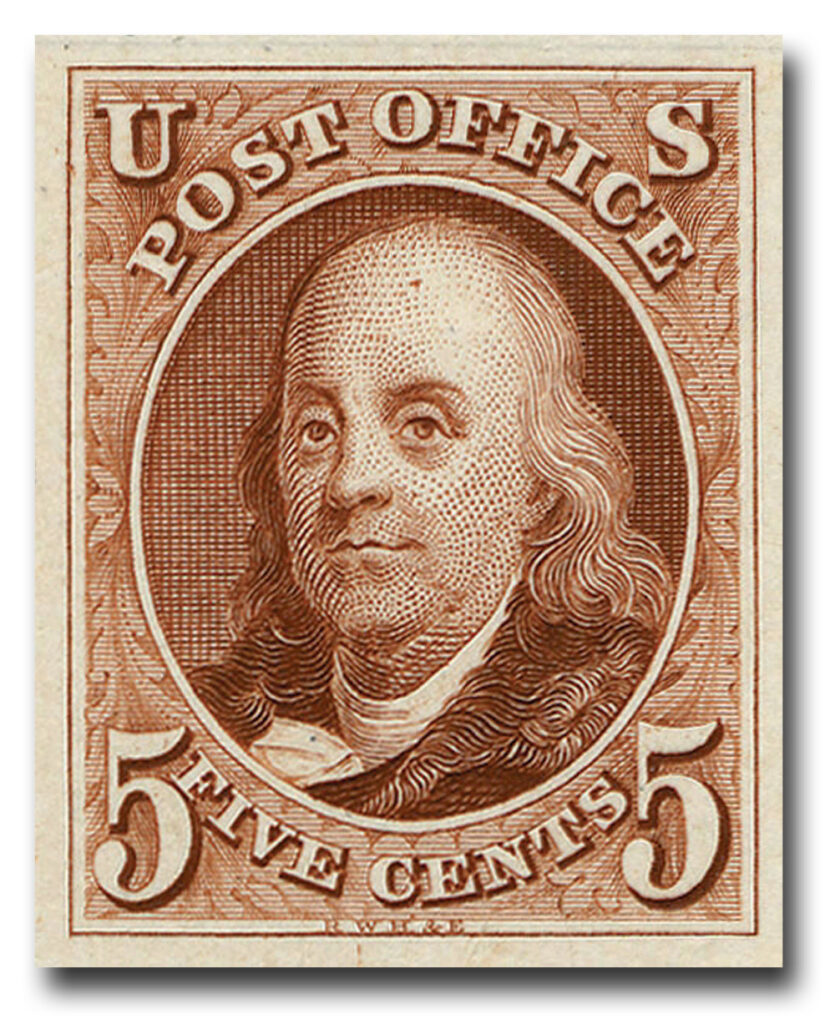
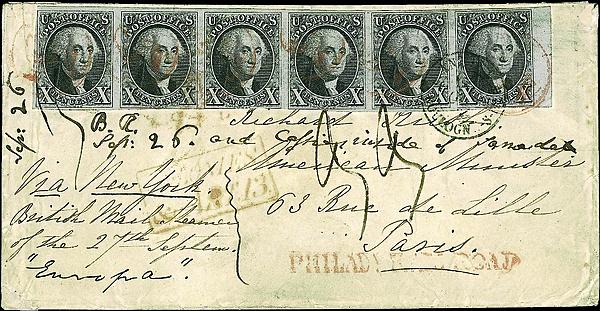
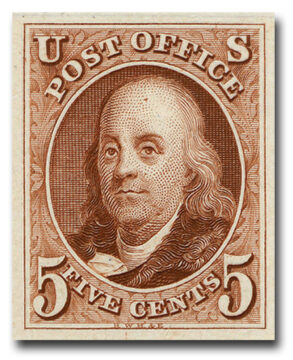
The first U.S. stamps came in just two denominations: 5 cents and 10 cents. The 5¢ stamp, featuring Benjamin Franklin, paid the basic rate for letters traveling up to 300 miles. The 10¢ stamp, depicting George Washington, covered longer distances. Both images were drawn from existing engravings.
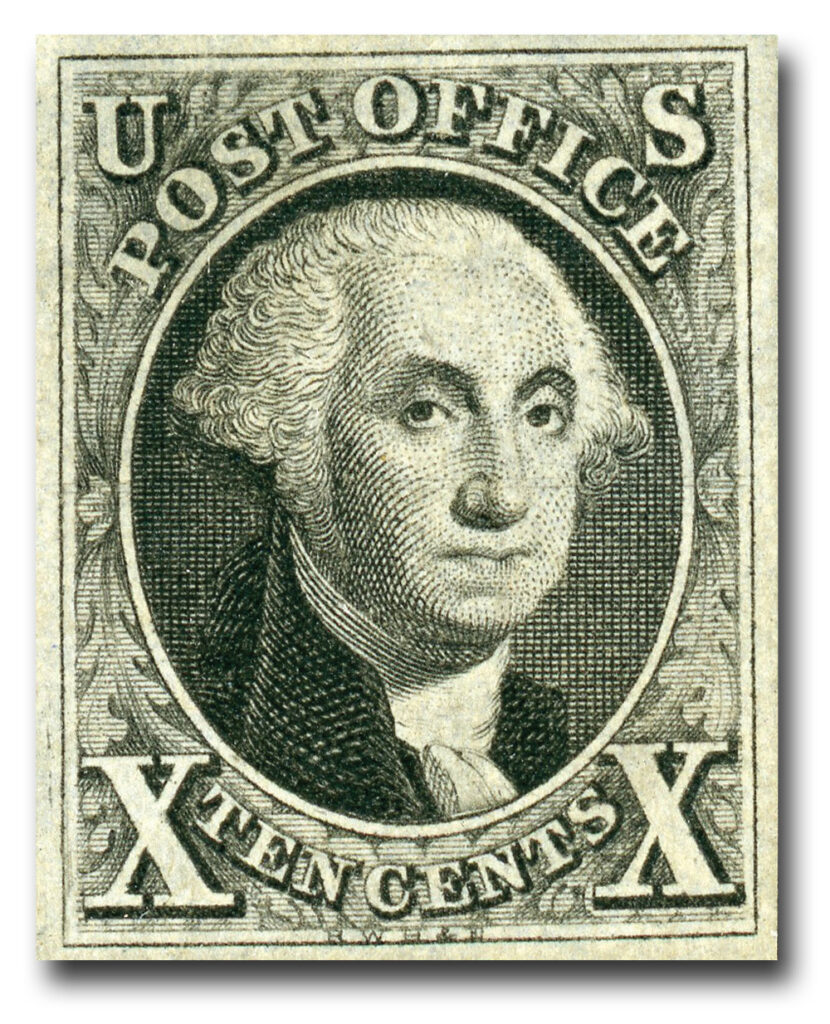
Unlike many European issues, the 1847 stamps were produced in relatively modest quantities and sold only at selected post offices. They were imperforate, printed in dark brown (5¢) and black (10¢). Their limited availability meant that many Americans continued using local postmasters’ provisionals alongside them.
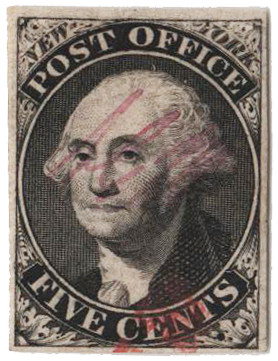
The introduction of these stamps helped standardize postal rates across a growing nation, encouraging correspondence at a time of rapid territorial expansion. Public adoption was gradual but steady, and by the early 1850s, stamps had become a familiar part of American life.